
Choose the wrong spring, and you could be faced with premature failure, poor performance, or unnecessary long-term costs.
So, whether you have a product in mind that you’re designing, or you’re refining an existing one, understanding the differences between the three main types of spring is essential.
What is a Compression Spring?
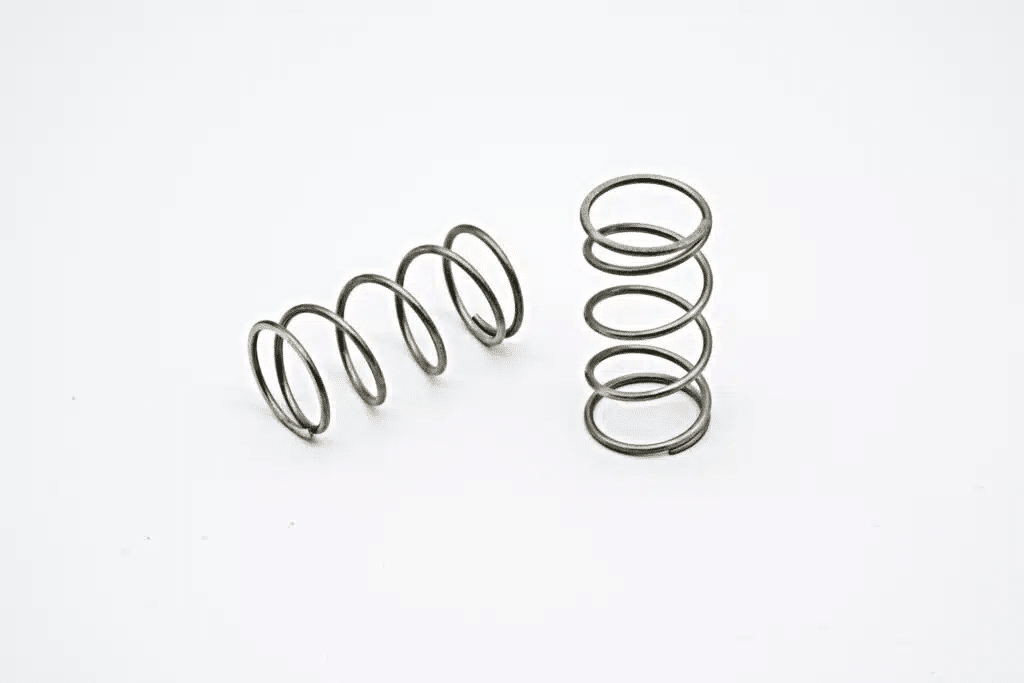
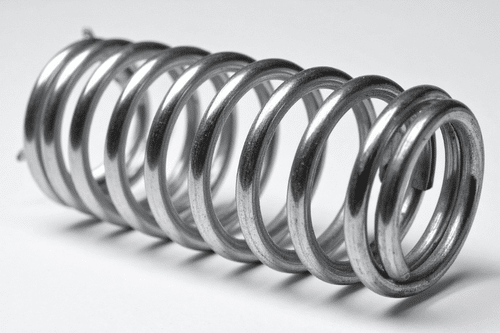
Simply put, a compression spring compresses (shortens) when a weight or load is applied. When the weight is removed, the spring returns to its original shape and length.
As such, these springs are suited to applications where components are pushed together rather than pulled apart.
When is a compression spring used?
Compression springs are typically open-coiled and do not require attachment points, so they can be used for a range of purposes.
Some industries you may find compression springs in include:
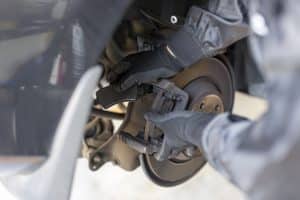
Vehicles will have a range of compression springs within their make-up, but you will more commonly find them in suspension components and valve springs.
Industrial Machinery
There are a range of industries that will use compression springs in their machinery. Common uses include for shock absorbers or vibration dampening.
On a much smaller scale, syringes and precision instruments used in the medical sector require compression springs.
Consumer Products
We’ve all come across springs in our typical day-to-day life before now, whether that’s in our pens, light switches, or battery compartments for the TV remote.
What is an Extension Spring?
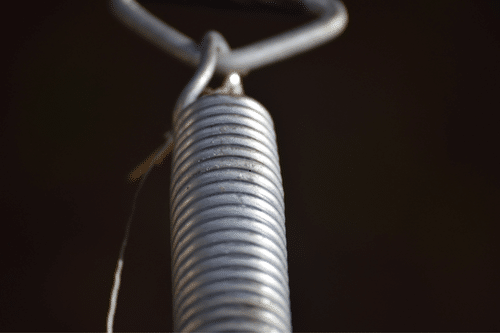
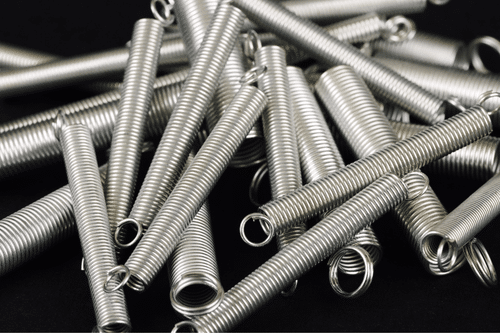
An extension spring (sometimes referred to as a tension spring) is the opposite of a compression spring. Rather than compressing under load, an extension spring will stretch when a force is applied, and pull components back together once the load is removed.
Since they work by pulling components apart, they typically feature hooks or loops to connect them to one another.
Extension springs are also built with initial tension, meaning that the built-in force must be overcome before the spring will begin to extend. This enables the spring to hold parts together even when no load is applied.
So, if your design involves pulling or requires components to retract and stay connected, an extension spring is usually the right choice.
When is an extension spring used?
Extension springs are used when components need to return to a ‘closed’ or resting position after being pulled apart.
Typical applications include:
Garage Doors
Extension springs are used as the ‘side springs’ on a garage door track. They stretch when the door is closed, and contract as the door opens to assist with lifting the door.
There are a range of uses in the agricultural industry, as these springs are designed to absorb shock, particularly in uneven fields. You may find them in lifting mechanisms in tractors, for example.
Fitness Equipment
On a consumer level, a lot of fitness machines are designed to create resistance for various exercises. As such, extension springs are the perfect type of spring for these systems to work.
What is a Torsion Spring?
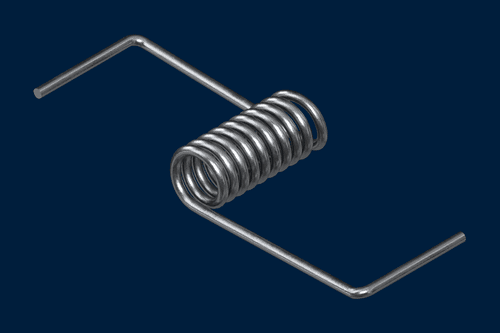
A torsion spring is different from both compression and extension springs. Whereas compression and extension springs both work with linear force, torsion springs resist rotational force, also known as ‘torque’.
When twisted, the spring stores energy and exerts this force to return the spring to its original position. They are typically mounted onto a shaft or pivot point and their ends are what apply the force to other components.
When should you use a torsion spring?
Torsion springs are ideal for rotational or angular movements. Examples include:
Garage Doors
As well as the extension spring on the side tracks of a garage door, there is also the torsion spring at the top. These are typically more durable and last longer than the side extension springs and are used to provide better balance and stability to the garage door.
Clips
As torsion springs are designed to return to their original position, they can be used for self-closing mechanisms such as in toolboxes or washing machines. They can also provide consistent clamping pressure in clothes pegs, or binder clamps.
Hinges
Door hinges use torsion springs to return doors to a closed position. Even handles, such as a car door, use torsion springs.
Key Differences at a Glance
| Spring Type | Force Direction | Spring Rate | Typical Use |
| Compression Springs | Push (compressive force) | Force per unit length (e.g. N/mm) | Absorbing impact, maintaining spacing |
| Extension Springs | Pull (tensile force) | Force per unit length, plus initial tension | Returning components to a closed position |
| Torsion Springs | Twist (rotational force) | Torque per degree | Hinges, pivots, rotational systems |
How to Choose the Right Spring Type
Selecting the right spring type can be fairly straightforward when adhering to the following rules.
Start with the direction of force
The direction of force is in the naming of the spring. So, if your application involves compression or pushing components together, you’d need a compression spring. If components are being pulled apart, you’ll need an extension/tension spring. Finally, if rotation is required, you’ll need a torsion spring.
Consider space constraints
All spring types will require some space for movement. With extension springs, there needs to be room for it to extend and attach. A torsion spring will need some form of shaft to be able to rotate effectively.
Evaluate load and performance requirements
You’ll need to consider the particular use of your product to determine load capacity, cycle life, and the required amount of rotation in the case of a torsion spring. Being able to match performance to application is critical.
Assess the operating environment
Once you’ve determined what spring you need, it’s then just as important to factor in the environmental factors. Environments that are susceptible to corrosion, temperature extremes, or exposed to chemicals and contaminants will all affect what materials to make your spring from.
Ask for expert input
Ultimately, what is going to help you determine the best spring for your product or application is collaborating with a spring specialist. At European Springs, we are experts in designing and manufacturing custom springs that are created specifically for your project. You can get in touch with one of our experts or request a quote to make a start on your project.