

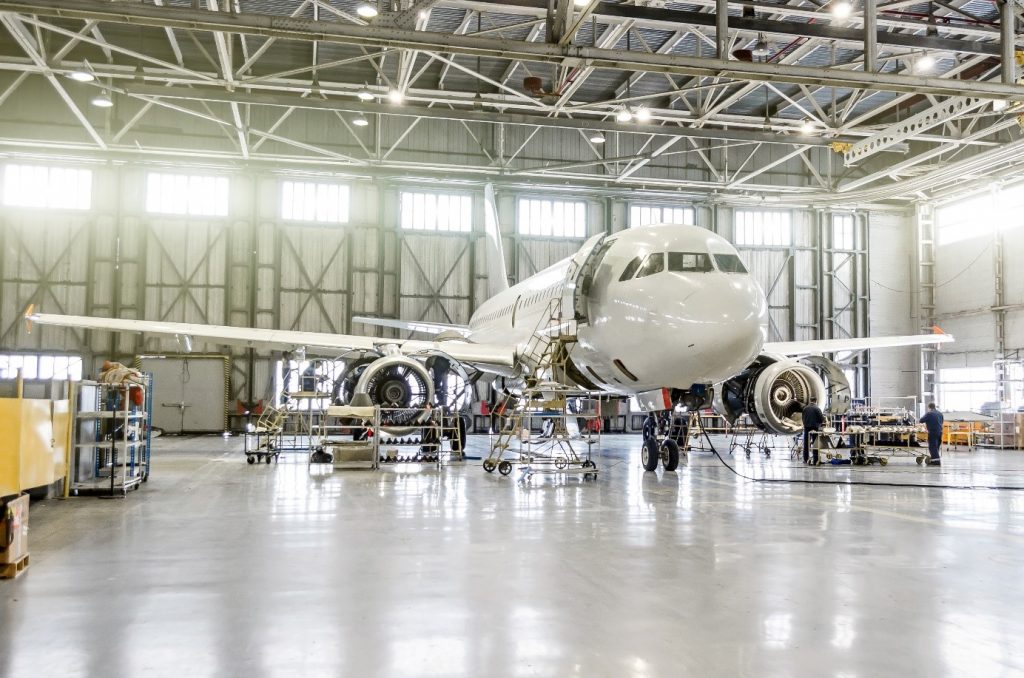
When observing a commercial airliner on the runway, observers naturally focuses on the massive exterior rather than the intricate internal mechanics ensuring passenger safety. From passenger seating and overhead lockers to flight controls and engine systems, springs used in aircraft help critical components move safely, return to position and perform reliably throughout every flight.
Global aerospace supply chains depend on these precise components functioning without failure. Whether supplying critical mechanisms to commercial airlines or partnering with global aerospace and defense companies, engineering resilience remains a universal priority for purchasing managers. Aircraft manufacturers rely on precision-engineered springs because they withstand the most demanding operating conditions.
These include continuous vibration, rapid atmospheric changes and repeated mechanical stress. Choosing an experienced spring manufacturer is equally as important as selecting the correct spring design, particularly where safety, reliability and long service life dictate the engineering requirements.
In this article, we will take a look at how aerospace springs function, why advanced material selection matters and what procurement teams must consider when sourcing bespoke components for aviation.

Why Are Springs Essential in Commercial and Private Aircraft?
Aircraft components must perform consistently across thousands of flight hours with minimal maintenance intervention. Engineers design springs to store and release energy repeatedly without experiencing material fatigue, making them fundamental for applications requiring absolute reliability. Their capacity to endure continuous mechanical loading while maintaining consistent force makes them a foundational element of modern aviation design.
Procuring these parts from a trusted, high-quality spring manufacturer guarantees the longevity of every spring or wire form integrated into the aircraft. Any component destined for aerospace applications requires exacting precision during the manufacturing process to guarantee seamless operation alongside surrounding mechanical systems.
In aerospace manufacturing, consistency dictates success. Even a microscopic variation in a spring’s coil pitch or wire diameter alters the performance of the entire assembly it supports. Rigorous quality control and precise manufacturing protocols ensure every spring performs exactly to specification throughout its intended service life.
Managing Extreme Temperature Resilience in Aerospace
Aerospace procurement teams frequently ask how standard components survive the extreme conditions of commercial flight.
Aircraft operate in environments where temperatures fluctuate violently. Components housed in the landing gear or exterior wing flaps might face temperatures dropping to minus 55 degrees Celsius at cruising altitude. Conversely, springs located near engine exhausts or internal propulsion systems regularly endure heat exceeding 400 degrees Celsius.
Standard steel degrades under these extreme conditions. To counter this, spring manufacturers utilise specialised superalloys. Materials such as Inconel, Monel and specific grades of stainless steel provide exceptional thermal stability. These aerospace grade alloys prevent the springs from losing their tensile strength or structural integrity when exposed to extreme thermal shock. Selecting the correct high-temperature alloy prevents mechanical failure and heavily reduces the need for frequent maintenance replacements.
How Do Aerospace Springs Support Lightweighting Initiatives?
Fuel efficiency remains a primary concern for modern aircraft designers. Every additional gram of weight increases fuel consumption and operational costs. This drive for efficiency brings lightweighting to the forefront of aerospace engineering.
Spring manufacturers contribute directly to lightweighting by optimising wire forms and spring geometries. By utilising advanced materials like titanium alloys, engineers can achieve the exact same mechanical force and durability as traditional steel springs while stripping away a significant percentage of the weight.
Furthermore, bespoke wire forms allow manufacturers to design compact, multifunctional components that replace heavier, multi-part mechanical assemblies. This targeted approach to design reduces the overall payload while maintaining strict aviation safety standards.
Where Are Springs Located in Aircrafts?
To save you from dismantling the cabin during your next flight, here are the most common applications for springs on a standard passenger plane:
- Seat Backs – Heavy duty literature springs help seat pockets retain their tension and shape despite constant physical stretching from passengers.
- Overhead Lockers – Torsion springs and dampeners help locker doors open and close in a controlled, smooth manner. This improves passenger safety by preventing sudden drops or aggressive movements.
- Onboard Ovens – Spring brackets and spring clips manufactured from high specification materials such as 17/7PH stainless steel and 316S42 maintain reliable performance despite repeated daily exposure to intense cooking temperatures.
- Aircraft Doors – As one of the most critical safety barriers on the aircraft, heavy duty springs used within the pressurised door mechanisms undergo rigorous load testing to meet strict aviation standards.
- Landing gear assemblies: Heavy compression springs and associated wire forms absorb massive kinetic impact forces and support mechanical deployment within the undercarriage systems.
- Cockpit controls: Highly calibrated precision springs sit inside navigation controls and cockpit instrumentation where smooth, repeatable tactile feedback is essential for the pilots.

What Should Buyers Look for When Sourcing Aerospace Springs?
Selecting a supplier for an aerospace application involves far more than matching physical dimensions. Purchasing managers and engineers should evaluate several crucial factors before specifying a manufacturing partner.
- Material availability for highly corrosive or thermally demanding environments.
- Proven resistance to material fatigue under repeated mechanical loading.
- Stringent and consistent manufacturing tolerances across large production runs.
- Comprehensive production traceability and transparent quality assurance documentation.
- The technical capability to engineer bespoke wire forms when standard catalogue components fail to meet exact requirements.
Connect With Our Engineering Team
Partnering with an experienced spring manufacturer ensures every component meets precise specifications from the initial prototype phase right through to full scale commercial production.
As the aviation sector advances, manufacturers place increasing importance on fuel efficiency, material durability and operational reliability. Every internal mechanism plays a vital role in keeping modern aircraft safe and efficient. Precision engineered springs continue to underpin the mechanical safety of aviation across the globe.
At European Springs Ireland, we manufacture exceptional quality compression springs, tension springs, torsion springs and bespoke wire forms for demanding engineering sectors. Whether your procurement team requires a standard product line or a highly customised manufacturing solution, our experienced engineers provide the exact technical support you need. Request a quote today to discuss your material requirements and discover how our precision manufacturing capabilities can elevate your next aerospace project.